The Preventive Oral Device (POD)
Request Appointment
Request Appointment
Meet Our Doctor

How to Find Us
The flat plane occlusal guard has been used to protect teeth for clenching and tooth grinding for the past 111 years. In 1908, Moritz Karolyi, a Viennese dentist, described bruxism as “traumatic neuralgia” and stated “it was the cause of a periodontal condition called pyorrhea (periodontitis).” He most likely fabricated the first occlusal guard and we have been using the design of ever since. Isn’t it time for a new design? In July of 2019 the FDA cleared The POD®, using Unilateral BiteBlock Technology® for bruxism and TMD. The POD® is a patent pending custom fit, laboratory fabricated intraoral mandibular splint designed to aid in treating clenching, grinding (Bruxism) and TMJ dysfunction. Worn during sleep the device serves to protect the teeth, crowns, veneers, and restorations from the destructive forces of bruxism and will help alleviate headaches, TMJ and muscle pain.
By having the dental arches out of contact, there is a reduction of trigeminal innervated muscular activity. This allows for reduced muscle tension and can help alleviate associated jaw pain and headache symptoms. The Unilateral BiteBlock Technology® allows for more room for the tongue, which is free to come forward for better breathing during sleep as opposed to the flat plane occlusal night guard which inhibits the tongue from coming forward.
Our body is equipped with a proprioceptive mechanism which will adjust to the biting forces based on the area of tooth contact. The Unilateral BiteBlock Technology® provides a reduced area of contact and can reduce the forces which could be harmful to our TMJ. This helps to protect our teeth and restorations from the destructive forces of bruxism. Does your jaw make sounds? Do you have headaches? Is your sleep disturbed? You may suffer from TMJ dysfunction and may benefit from The POD®. Ask your dentist about The POD®.
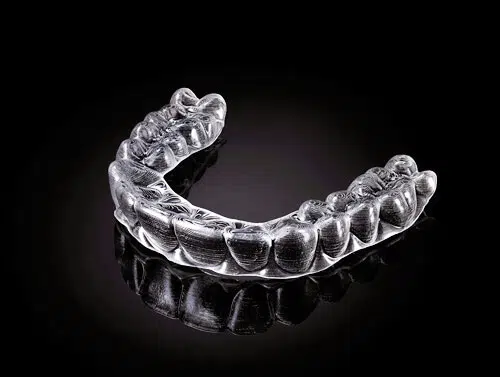
By having the dental arches out of contact, there is a reduction of trigeminal innervated muscular activity. This allows for reduced muscle tension and can help alleviate associated jaw pain and headache symptoms. The Unilateral BiteBlock Technology® allows for more room for the tongue, which is free to come forward for better breathing during sleep as opposed to the flat plane occlusal night guard which inhibits the tongue from coming forward.
Our body is equipped with a proprioceptive mechanism which will adjust to the biting forces based on the area of tooth contact. The Unilateral BiteBlock Technology® provides a reduced area of contact and can reduce the forces which could be harmful to our TMJ. This helps to protect our teeth and restorations from the destructive forces of bruxism. Does your jaw make sounds? Do you have headaches? Is your sleep disturbed? You may suffer from TMJ dysfunction and may benefit from The POD®. Ask your dentist about The POD®.
By having the dental arches out of contact, there is a reduction of trigeminal innervated muscular activity. This allows for reduced muscle tension and can help alleviate associated jaw pain and headache symptoms. The Unilateral BiteBlock Technology® allows for more room for the tongue, which is free to come forward for better breathing during sleep as opposed to the flat plane occlusal night guard which inhibits the tongue from coming forward.
Our body is equipped with a proprioceptive mechanism which will adjust to the biting forces based on the area of tooth contact. The Unilateral BiteBlock Technology® provides a reduced area of contact and can reduce the forces which could be harmful to our TMJ. This helps to protect our teeth and restorations from the destructive forces of bruxism. Does your jaw make sounds? Do you have headaches? Is your sleep disturbed? You may suffer from TMJ dysfunction and may benefit from The POD®. Ask your dentist about The POD®.
What Happens During The Procedure For Dental Bonding?
Dr. Ghosh will begin by buffing the area that will be receiving the bonding, and applying a bonding gel. The material that is used is carefully matched with your smile for a flawless finish. The composite resin is applied to the tooth, and smoothed into place to blend flawlessly with your natural smile. A special curing light is used to harden the material, keeping it firmly in place. Caring for your new bonding is as easy as brushing and flossing your teeth. You can expect years with a beautiful smile, and can have the bonding redone over time if it begins to wear or show signs of damage.
If you think you might need or benefit from bonding, call our office today, and we will be happy to further assist you.
Our Patient Testimonials

"Dr. Ghosh & her staff are great working as a team. Dr. Ghosh is a caring person, she took time to explains the importance of oral care n how it can affect our health. Her assistant Hawraa n Annabel are also very professional n gentle."
Winnie Ng
"I have received excellent care from Dr. Ghosh her technicians, assistants and front desk receptionists. They work as a team to provide their patients the best of care with warmth and professionalism. I highly recommend Dr. Ghosh and her team."
Joyce Taylor
"Dr. Ghosh & her staff are great working as a team. Dr. Ghosh is a caring person, she took time to explains the importance of oral care n how it can affect our health. Her assistant Hawraa n Annabel are also very professional n gentle."
Sara Graf
"I’ve been going to Kea’s Smile Studio for years and everyone on staff is always so kind and knowledgeable. Anabelle and Hawraa were both very sweet and quick to answer any questions."
Heather Ward
Book An
Appointment
Book An
Appointment